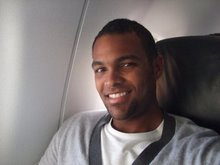
Y'all wasn't exactly expectin' a pitcher a'Mammy, wuzya?
Eighty years ago this week, Monroe, Louisiana-based Delta Air Lines began serving Atlanta Airport with one daily nonstop to Birmingham. From that skimpy hop over the state line, Delta has developed ATL into the world's largest airline hub, with nonstop flights to over 80 international destinations and who-knows-how-many domestic cities (well, Wikipedia probably knows, but...). In fact, it's because of Delta that whether you're going to Heaven or Hell, you'll have to change planes at ATL.
A large part of the reason I like Delta (theoretically, anyway) is because of its commitment to Atlanta, a Southern city that, for all its faults, has always been much more progressive than the region to which it belongs, no doubt a positive consequence of its connections to the rest of the world. Likewise, Southern culture gets exported as well, from the unrefined graciousness of the cleaning ladies in the terminal to the gleam of the TSA agent's gold tooth—my home culture, for better or worse. Oh, and there's also that Chick-fil-A in Concourse A.
You can read more about Delta and the A at the airline's blog. Meanwhile, in honor of Delta's 80th anniversary at the doubly-named Hartsfield-Jackson Atlanta International Airport, I leave you with Atlanna's own OutKast and their Southern Gothic classic, "Ms. Jackson," probably filmed right down US-19 from the airpert itself. For real.
Fly Brother welcomes your views. If this post hit the spot, please comment and/or click.
Many Americans might think the question of how many continents exist on Earth should be settled (of course, the demotion of Pluto as a planet a few years back ought to remind everybody that even "established" facts can change). But in Latin America, where I've lived and worked since 2005, the established number of continents students learn is five: Africa, Asia, Europe, Oceania, and...America.
Already, us United Statesians are considered arrogant for claiming "American" as a nationality, when it's seen as a continentality akin to "European" for most in the rest of the hemisphere (that's a whole other post), so trying to separate the Americas is viewed as a knock against Latin Americans: "North Americans don't want to be on the same continent as Latinos." This, of course, conveniently ignores the grouping of Central America and the Caribbean, regions soaked in Latin-based languages and their associated cultures, soundly in North America.
I've had arguments with both students and other professors regarding this slight difference in continental calculation. Fivers argue that America should be counted as one landmass because it's so separate from the others, and that Europe, Asia, and Africa—all three of which are connected to each other—should be counted separately because of the varied cultures. Poor Antarctica is consigned to continental limbo because she has no human population native to her frozen expanses.
I, a staunch sevener, counter that technically, there should be four continents, since the very word comes from the Latin, terra continens (thanks, AskOxford!*), which means "continuous land." Ignoring the divisions caused by the man-made Suez and Panama canals, America, Eurafrasia, Antarctica, and (maybe) Australia are each continuous lands. My argument, however, is that since Eurafrasia is indeed considered three continents by both camps, North and South America, connected by svelte and sexy Panama and her 37-mile waist, should only naturally be counted as separate. And, considering continental drift and geologic history, the isthmus that comprises Central America is indeed very, very young, having risen from the ocean a scant three million years ago, while South America started separating from Africa 130 million years ago and North America from Europe 70 million before that.
I don't know how the Brits or other English-speaking countries view things, or how many continents other teachers accept in their classes; on my tests, it's seven. Get it right.
*In the interest of fairness, I consulted the Real Academia Española for the official Spanish-language definition and got cada una de las grandes extensiones de tierra separadas por los océanos ("each one of the large extensions of land separated by oceans," basically, no real help for either argument). Fly Brother welcomes your views. If this post hit the spot, please comment and/or click.
San Francisco's black population has declined from 13% in 1970 to 7% today. Micah sees himself as less than one-in-ten; Joanne sees herself as just one. Medicine for Melancholy explores love, race, and, to my mind, America's most beautiful city.
Austin, Texas might get all the hollers from mainstream media, but I think it's that other college town and Southern state capital a few hundred miles down I-10 East that speaks surprisingly to all-inclusive diversity and the rack of artistic expressions, cultural encounters, and eating options that entails. No, this ain't your granny's Tallahassee.
Nestled amongst the red clay hills, moss, and magnolias of North Florida, Tally indeed reminds folks that it was "the only Confedrit capital east of the Mis'sippi not captured by Yankee fawces during the waw of Nawthun aggression." And while the atmosphere is still not exactly "We Are the World," the city's third black mayor currently holds sway over politically blue territory in a decidedly red region of the country, while students, alumni, and faculty of (my alma mater) Florida A&M University continue making socioeconomic headway at a percentage unmatched anywhere else in the state. Adding to the mix is a burgeoning Latino and Asian student population, especially at Florida State University, and many young people unaffiliated with government or university who've visited, liked, and stayed, and who've carved a niche of professionals and bohemians that have, in turn, spawned an explosion of alternative activities to traditional Homecoming games and massive barbecues (not poo-pooing either, mind you).
If you're in town on the first Friday of the month, head to the aptly-named First Fridays at Railroad Square, a gathering of eclectic visual and musical artists showcasing their wares among off-price wine and grilled snacks. I bought a t-shirt with an outline of Florida and the tagline, "No Other State Has Sunshine."
From now through March 23rd, Black art collectors Bernard and Shirley Kinsey display paintings and historical documents, including a hilarious Dear John letter from Zora Neale Hurston, at the Mary Brogan Museum of Art & Science. The exhibition goes to the Smithsonian when it leaves Tallahassee.
Saturday afternoon, stroll through the mangrove forest at the Tallahassee Museum and watch the black bears and Florida panthers frolic with man-sized yarn balls, or soak up the silence in Princess Murat's modest plantation house. Saturday night, get yo salsa on at Atlantis Bar and Grill or have a drinky-poo in the lobby of the Aloft Hotel (a much more welcoming atmosphere than at the Hotel Duval down the street).
Because of a bureaucratic bottleneck involving my Brazilian work papers, I'm not heading down to Brasilia for another month. So I decided to use the 40,000 Delta SkyMiles I had stashed in my account for an excursion to warmer climes. In my last post, I asked readers for suggestions on how to use the miles, mostly to get ideas but also to maybe get some lurkers to out themselves; that didn't work very well (thanks, Ali La Loca, for your input) but some of my friends did weigh-in via phone and email.
So, after many, many hours of checking and cross-checking dates and destinations, I snagged a round-trip to Guatemala City for 35,000 miles (plus $55 in taxes). I'll be gone for two weeks, making the circuit from Guate across the Honduran border to Tegucigalpa, the Caribbean beach town of La Ceiba, industrious San Pedro Sula, then back into Guatemala to check out the Mayan ruins of Tikal before heading back to the capital for my return flight. I get to see stunning Mayan pyramids, experience the Garifuna culture of the Honduran coast (a mixture of African and indigenous flavors alongside crazy-gorgeous beaches), and spend about two-thirds less money than I'd be spending just chilling in the chilly—and expensive—US of A.
See, travel can help you save money!
If you're in the area during the first two weeks of February, know someone who is, or know of something I should experience while in Central America, definitely give me a shout!
And, of course, you're certainly invited to come with.
(By the way, I'm not going to the colonial city of Antigua because, well, after Saint Augustine, Santo Domingo, Havana, Cartagena, Bogotá, San Juan, Panama City, Popayán, Quito, Villa de Leyva, and Salvador da Bahia, I'm kind of colonial-ed out!)
Fly Brother welcomes your views. If this post hit the spot, please comment and/or click.
Just this week, I had begun the preliminary planning for two weeks of volunteering this summer at an environment-focused work camp run by the NEGES Foundation in Léogâne, Haiti. Just yesterday, a magnitude 7.0 earthquake rocked the country, its epicenter only a few miles away from Léogâne, just west of the capital, Port-au-Prince. With communication lines down and innumerable casualties, this has been the worst earthquake to hit the disaster-plagued and poverty-stricken country in 200 years. According to press accounts, hospitals and other traditional disaster relief locations have been destroyed.
The NEGES Foundation, with the help of my friend Dr. Brandi Reddick ofThe Green Pharmacist, had been planning a summer camp for kids that focused on environmental awareness and green living, in addition to the foundation's normal projects, which include planting trees and operating a school, community center, and Internet cafe in the town. One of the organizers, Ms. Marie Yoleine Gateau, had just spoken with me Monday about coming down to work this summer. As of now, she has still been unable to reach her family and friends in Léogâne from her current residence in New York.
The pictures in this post are from Dr. Reddick's trip to Haiti last summer, when she first volunteered with the work camp. Her enthusiasm in describing her experience inspired me to go myself this year. When I spoke to her today, she said that most people have this abstract image of "those poor people in Haiti already suffering," and while the poverty is real, the people still lead as normal lives as they can; most were finishing up the work-day, getting dinner started, or out playing soccer.
While I'm unsure as to the status of my trip to Haiti, I still plan on at least volunteering my voice to raise consciousness about this tragedy, and to solicit help and support beyond the brief period of newsworthiness afforded to the people of Haiti this week.
To volunteer funds, clothing, medical supplies, and/or time to the NEGES Foundation, please contact Ms. Gateau via email: p y o 1 [a t] a o l [d o t] c o m.
Fly Brother welcomes your views. If this post hit the spot, please comment and/or click.
Cruising around Miami for New Years in a rental car with no iPod dock meant much radio time. Thankfully, 93.9 (in spite of random and agonizing bursts of "I Gotta Feeling," "Dancing Queen," "Single Ladies," and "I Will Survive") took it back to 1980s Dade County, when no ethnic community was a true majority, South Beach was still gritty and vice-ridden, and everybody punched it down 95 South to locally-produced freestyle and bass music*. Here's some of Miami's finest (plus a little Crockett and Tubbs action) to carry you from MIA across Biscayne Bay:
I haven't been on vacation in Florida with my entire family since the mid-90s, and spending this Christmas with them in Orlando brings back and brings up all sorts of memories and madness. Back in March, while still living in Colombia, a bout of homesickness caused me to pen an homage to my home state, a celebration of both the geographic and temporal location that serves as my cultural foundation. Being back home, I find these same sentiments echoed in family conversations and collective memory, in spite of mindless sprawl and cultural homoginization, increased population and pervasive plasticity of modern Florida. For new readers, I hope you find this post enlightening and entertaining. For long-time readers, I hope this re-post is just as engrossing as you originally found it (well, assuming you found it engrossing, originally :-)
Happy Holidays to all the Fly Folk out there. Thank you for reading.
~~~~~~~~~~~~~~~~~~~~~~~~~~~~~~~~~~~~~~~~~~~~~~ Missing Middle Florida (Originally posted March 10, 2009)
There's the moonlight and magnolias of the North, the kid-centered wonders of Central, and the tropical swing of the South - the geographic regions of the state of Florida. Then there are the temporal zones: the Old Florida of Osceola and Andrew Jackson, of Saint Augustine and the Confederacy, of Zora Neale Hurston and Marjorie Kinnan Rawlings. The New Florida of Walt Disney and Jeb Bush, of Little Haiti and Little Havana, of Spring Break and Dave Barry. And I grew up somewhere in between, a native Floridian born to native Floridians, who have a connection to the peninsula, know all the secret places, and how to get everywhere in the state without once climbing on one of those new-fangled interstates. I'm from Middle Florida.
Being born at the tail end of the 70s means my memory only extends as far back as 1980, a time of transition for my home state. Since the late 19th century, hell, since the 15th century when Juan Ponce de Leon named the place for the flowers he saw while killing off Tekestas and searching for the Fountain of Youth, Florida has been a tourist haven. But I came of age just as manufacturing and the military - long mainstays of the state's economy, lead by Jacksonville ("The Bold New City of the South") - took a backseat to newly invented mass tourism and an upgraded agricultural sector, just as the Mariel Boat Lift cemented Miami's status as capital of Latin America, after the influx of snow birds and Baby Boomers but before the boom of babies born to folks from other states and other countries. I'm not pre-Disney, but I'm pre-Disneyfication.
I remember taking U.S. 17 to Orlando, U.S. 90 to Tallahassee, and A1A to Daytona Beach, passing the original themed attractions built along winding hightways at the advent of the Motor Age that had already faded in the shadow of their newer, flashier, 2.0 Beta versions in Orlando, before re-inventing themselves in order to compete: the thin, weary dolphins at Marineland; corny water ski shows at Cypress Gardens; determined young synchronized swimmers in mermaid outfits at Weeki Wachee.
I miss those days: school field trips to the fort at the "Nation's Oldest City," Saint Augustine, marveling at the kooky billboards for the Ripley's Believe-It-or-Not Museum and stopping to pick dates off the palms that lined U.S. 1 out of town. Gatorland, Gatorade, the Gator Bowl, and a fierce, sometimes irrational devotion to the University of Florida Gators. Crosstown high school football rivalries between Raines and Ribault and cross-state rivalries between Lake City Columbia and Fort Walton Beach Choctawhatchee back when high school football rivalries mattered. Indigenous place names like Okeechobee, Okefenokee, Ocoee, Loxahatchee, Pahokee, Immokalee, Kissimmee, Ichetucknee, Chattahoochee, Apalachee Parkway, Miccosukee Road (shouts to Tallahassee). The ease of slipping between Southern and tropical cultures as effortlessly as organizing a random crab boil or barbecue on a typical hot-ass April or September afternoon. FAMU's Homecoming Parade, which always started out on a freezing November morning and ended up blazing hot by 10 AM, and the FAMU-BCCFlorida Classic, back when it was held in Tampa, back when the Tampa Bay Bucs sucked. Kennedy Space Center and Melbourne Jai-Alai. Dances like the Tootsie Roll and the Tawlet Bowl, accompanied by syncopated Flawda Bass and the raunchy lyrics of Dade County's poet laureate, Luther "Luke" Campbell. The Fort Lauderdale Swap Shop and Flea USA and the Opa Locka-Hialeah Flea Market (straddling Lock-town y la República de Hialeah). Miami with only a small cluster of skyscrapers Downtown and televised vice on run-down South Beach and the original Orange Bowl and an equal number of everybody from everywhere back when, it seemed, more folks got along better (though the 1982 Overtown riot told a different story). Tropical storms with names. Blue skies in the east and black skies in the west. Miles of undeveloped coastline. Flatness.
No, I don't miss the stench of the pulp mills and the knowing where you could and couldn't go as black folk after dark, lest we forget the Florida was indeed a slave state and didn't desegregate schools until almost 1970. After all, many strange fruit-bearing trees grow alongside palm trees. But I do miss the strong black communities and institutions that were established and thrived in that environment of hate. And I miss being in a place where I have roots as exposed, yet as deep as the mangroves in the Everglades.
NEW YORK— Yeah, there are rats, service disruptions, drunken old men, drunken young women, and the pungent odor of pee, but dammit, the New York City subway runs 24/7. And I mean the whole system, not just a couple of train lines here or there. In the city that never sleeps (an oft-quoted untruth), the 24-hour bars and 24-hour diners and 24-hour pharmacies and 24-hour gyms and 24-hour Apple Store remain connected by underground rail. The late night trains that stop at each station don't convey the same warp-speed urgency of the express trains that race underneath the grid of Manhattan at ten blocks a minute, but the lower number of riders means available seats and fewer obstacles when rushing through the maze-like transfer stations.
There's also the loopier entertainment; at midnight, you not only get the drummers and the guitarists and accordion players, you get to see punchy folks getting jiggy like this in the subway:
On a bottom-lit dancefloor the size of a small hotel lobby, black-white-and-Latin b-boys, Asian ballet dancers, 40ish couples from Spanish Harlem, 50ish couples from Harlem Harlem, Korean-American salsa instructors, A&R execs, mailroom gofers, baldies, dreadheads, girls-with-girls, guys-with-guys, professional dancers, occasional two-steppers, Southerners, Northerners, foreigners, and a middle-aged woman with a cane all samba'd, salsa'd, and shook assorted and voluptuous body parts in the spirit of the way the truth the light the drum.
What might have been an underground incarnation of the nearby United Nations headquarters jammed to an intoxicating, almost religious confection of Diasporic rhythms tracing the triangle from Banjul to Buenos Aires to the Bronx and back, conjured up by musical sorcerer Nickodemus and supplemented by live percussion. As soon as mi gente's hips got used to swiveling, feet got called into glorious church-stomping candences, arms enlisted in jazzy flourishes, and heads involved in breakneck floor spins. Continuous smiles shifted from toothy and excited grins to coy, Mona Lisa-style expressions of contentment that body and beat worked in unison. Couples formed and broke apart, partners shifting among the crowd of one-time strangers who at once recognized each other as disciples of the music. There was no pretense, no posturing, no being too cute or hard or proud to nod, smile, or give a thumbs-up. Of all the people in New York, it's the house heads who embody the ideas of borderlessness, of universality, of humanity in celebration of diversity and ignorant of demographics, all the while charging and being charged by the eternally pulsing heartbeat of enchained masses ferried across the Atlantic centuries ago.
London tries, but this happens no where else but New York.
Here's a little shadow-dancing footage for those of you who couldn't make it to the event. You can't see much, but you can feel it. Sorry I couldn't film more...I was too busy gettin' my own groove on.
Today, I head up to the Frozen North: ten days in New York City (any lurkers in the area, get at me). In honor of the occasion, I'm going to share with you a song that I think speaks more to The City I usually encounter than does Jay-Z and Alicia's new cut, Madonna's homage, or even Old Blue Eyes' standard paean (though I think "Sidewalks of New York" might come close :-) Anybody know this one?
On a related note, I read recently that one should to verbalize one's dreams as a part of manifesting them into reality. That being said, I shall verbalize that, within five years, I plan to be living seven-to-eight months of each year in São Paulo and three-to-four months of each year in New York (the summer months, of course; what could be better?), with each transition bookended by a few weeks of travel. The question isn't "why?" (I mean...why not?). The question is "how?"
On an unrelated note, I came across this song in my iPod recently. If electronic music is supposed to be danceable and joy-inducing, then why does this one make me so sad? :-(
Fly Brother welcomes your views. If this post hit the spot, please comment and/or click.
While I catch up from a hellified week of handling personal business before the trip and the move, I thought I'd share this inspiring clip of a 13-year-old violin virtuoso that I encountered last week earning a lot of change on the street in Philadelphia:
I've never been known as a flag-waving, red-white-and-blue-bleeding patriot (often, quite the opposite), but there is one thing I am constantly in awe of and can never begrudge the United States: the greatness of its largest cities. Over the past few weeks, I've been to several American burgs, each one unique in its history, culture, and atmosphere; each a national, if not international, center of industry, commerce, communication, and transport; each with myriad museums, restaurants, concerts, festivals, and other markings of cosmopolitan sophistication. Say what you will about Wonder Bread suburban monoculture—America's cities as parts of a larger whole are unmatched anywhere else on the planet. I doubt any other country has as many places peopled by representatives of every cultural group on Earth:
Miami, Atlanta, Washington, Houston, Philadelphia, Seattle, Dallas, Boston, San Francisco, Chicago, Los Angeles, New York*
Take any of the cities I just named, and you can come up with any random dish, type of music, style of dance, or artistic movement: there's samba and salsa in Seattle, pad Thai in Miami, Guinean drum circles in Houston, and Tahitiandance classes in New York. And the ease of internal migration and the abundance of external immigration means the fusion of local traditions with recent additions.
Naysayers might erroneously invoke Europe as a comparison: there is none. Europe is a collection of independent nations with their attendant histories, languages, and former colonial empires. The majority of major cities on the Continent and the Isles are ex-imperial capitals, where wealth and power were concentrated during a multi-century competition with neighboring metropoli. The greatest American cities developed through a balance of domestic and international interests, without being national, or sometimes even state capitals. Besides, the United States is still only one country; there are others larger and more populous.
Then, there are equally vast nations, such as China or India for instance, with a large cadre of population centers that are, unfortunately, just that: agglomorations of people drawn together, like all cities, by virtue of resources and opportunity, but largely homogenous relative to their enormous population size and not very well-known on an international scale as models of economic or cultural diversity.
Yes, American cities deal with gang violence and grit, economic and social disparity, declining educational output and unemployment, pollution and inadequate public transportation. But these ills drive the best and brightest in their quest for liveable, enjoyable hometowns. The country is the biggest beneficiary of that work, manifested in those swarming hubs of human interaction where city lights outshine stars.
*I'm purposely excluding "niche" cities like Las Vegas, Orlando, Honolulu, or New Orleans; or "secondary" places like Charlotte, San Antonio, Portland, or Denver, despite soaring cosmopolitanism in each.
Fly Brother welcomes your views. If this post hit the spot, please comment below and/or click.
Yesterday, I wrapped up a two-week jaunt out to California, Washington State, and Oregon, for no particular reason other than to meet up with friends on their home turf and to experience a part of the country I'd never been to. Of course, as with most new and interesting places I encounter these days, my mind goes automatically into livability-evaluation mode and I start to assess various indicators (job availability, income potential, cost-of-living, social and cultural offerings) in a semi-conscious litmus test of whether or not I'd be inclined to move there sometime in the unspecified future. This most always happens when I'm basking in the warmth and attention of good friends, who work unintentionally as the best PR agents any city could hope for, and I often leave considering, temporarily at least, a potential home-base that I hadn't before. So it went as I ventured from the humid semi-tropics of my native Florida over to the green-and-gold splendor of America's (Upper) West Coast: San Francisco, Seattle, and Portland.
San Francisco Bay I got to San Francisco International at almost midnight on July 1st, and was whisked away into the city in a black Toyota Prius (that I promptly nicknamed "Kit") by Mike and Ana, a neo-California power-couple-in-the-making whom I met in Colombia over a year ago. We spent the first couple of days on both sides of the Bay Bridge whetting our collective appetite for Thai food and tribal house, and getting our intellectual grooves on at the stunning California Academy of Sciences (NightLife on Thursdays, featuring a DJ and an albino alligator) and the Oakland Museum of California (featuring a poignant exhibition on the African presence in Mexico and a live salsa orchestra - thanks to reader Keith for that tip). Independence Day meant a breezy barbecue (featuring Jenkins Barbecue sauce specially shipped from Jville) out at Fort Mason Park and accompanying fireworks, with fifteen cool peeps huddled under three blankets and swathed in hoodies, hats, and scarves to watch the show; Mark Twain wasn't lyin' about these San Fran summers. A couple days later, Mike dragged me with him for indoor rock climbing before we had a BBQ re-do under the shadow of the Golden Gate Bridge (there was sauce left, so...), and while M&A worked, I either hit the gym (Crunch Fitness in the Alhambra Theater - phenomenal - click for free pass), hit the streets (Black man taking snapshots of the mansions of Pacific Heights - talk about tempting fate), or hit the first season of "Mad Men" on DVD (the show's hot, y'all). I even got a chance to meet some West Coast cousins I'd only heard of, but had never seen, over some Burmese food that I'd only heard of, but had never tasted.
Frisco has two serious downsides: the weather (fog and frost in August!) and the expense. My friends' small-but-comfy studio rents for $1300 a month and no meal at any sit-down restaurant clocks in at under $8 (that includes breakfast)! The city is known as being the most expensive after New York, and for an aspiring writer without some type of independent wealth, you can hang San Fran up. That being said, the enormous natural and architectural beauty of the city—a 19th-century masterpiece perched atop commanding peaks over a turquoise bay—coupled with a cultural mix that truly does seem to get along better with each other than any other place in the country (even Oak-town represents with a large black middle class, thriving in spite of trigger-happy transit cops), the friendliness of service people (not one but two foreign convenience store owners welcomed me into their shops without a sign of resentment or bitterness...they clearly have never been robbed), the cult-like devotion to Obama (we started playing punch buggy with Obama t-shirts), and the urbane quirks (two skinny, butt-nekkit dudes walking hand-in-hand in the Castro in 50-degree weather; Asian girls jamming to Jade on their iPods; street names like Divisadero and Guerrero; super-futuristic-warp-speed-high-pressure bathroom hand driers; Bollyhood and Little Baobab and Escape from New York Pizza!) put SFO high up on the list of Fly Brother's hang-out spots. I just can't afford to live there.
Seattle After my Golden State interlude, I carried it up the coast via plush Virgin America to the Emerald City. My grad school buddy Lisa scooped me from Sea-Tac and drove us on a gray, overcast afternoon through forests of dark and piney Christmas trees into downtown Seattle, named after a vanquished Indian chief and squeezed on a hilly isthmus between Lake Washington and Puget Sound. We dined on fish and grits (which they called polenta and charged $18 for) with views of the busy seaport, downed just-cool-enough-to-drink-immediately mugs of coffee, and caught up on life as the sun finally came out, then slid under the horizon just before 10 PM. Flannel was the order of the day, especially in Lisa's Scandinavian-inspired barrio of Ballard, and even though my few days in Seattle were sunny and warmer than San Francisco, a green, underlying coolness permeated the air and always seemed ready to pounce like an animal on the nascent daytime heat. I crashed the next day on free-wheeling, centrally-located Capitol Hill with mohawked Brazilian Couchsurfer Gabi, who invited me to a samba set at Cellars Belltown (free on Thursday nights) and got jiggy with the strong contingent of Brazilians, Dominicans, and other assorted black and brown youngins who came out of the woodwork (I was too busy dancing and trying to get laid to take photos, sorry). Friday, after hitting a hangar-sized 24 Hour Fitness, I spent the afternoon horsing around with Lisa and Dutch Couchsurfer Ozella in front of the Seattle Asian Art Museum (see me on camel below) and down by the Space Needle. The tower's twenty-dollar admission fee was enough to discourage me, but we took photos and rode the Seattle Monorail and the carnivalesque Windstorm roller coaster. In full-on daylight, the Space Needle does indeed look like a relic from the Jetsons Pavilion at EPCOT, but at night, against the boxy, sparkly rectangles of downtown Seattle, with dots of light gliding through the sky in succession towards the airport, the fluid, illuminated white structure stands cool and imposing, the embodiment of the future we're living.
With all the dot-coms based in the area, Seattle's also not the biggest budget destination. And while the short summer is pleasant, with lingering sunlight and lots of parks to play in, it's still damn short; wintry rain sounds even less appealing than snow. Garbage Nazis are everywhere: you can't just throw shit away out West...there's recycling, compost, then regular waste. The city's also more ethnically diverse than I had anticipated, though much of that mixture seems to occur among the homeless population. People in crowded clubs and bars are exceedingly polite, random skyline and water views pop out of nowhere, and the double happy hour menus (4-7pm, then 10-midnight)—La Isla, anyone?—mean a slew of late-nite eats. Despite other people's disparaging remarks about dullness, Sea-town's done right by me.
Portland I took Amtrak's Cascades route from Seattle to Portland, a three-hour rail expedition alongside the vast Puget Sound, past hulking, forested islands like Chia-whales rising from the glassy water, and under trestled and suspended bridges painted in earthy colors. Adam, my old roommate from Bogota, now permanently bearded and managing a hostel, picked me up from red-bricked Union Station, gave me a quick tour of the surprisingly large and bouncing downtown area, and we grabbed brunch over at Genies Cafe (the crabmeat omelet was slammin'). Afterwards, he went to work and I met up with Erika, colombiana and one-half of a couple I met in Rio over the holidays, and we walked around and hit some of the famous food carts downtown. Then it was Tori Amos at the Arlene Schnitzer Concert Hall, a stupendously beautiful rococo theater with a gargantuan "Portland" spelled out on the marquee. We were eight rows back from the stage; Tori toe it up, focusing mostly on the new stuff, but sated us old heads with "Cornflake Girl" and "Little Earthquakes." Lots of things like, "Tori, you're my goddess," and "Tori, I wanna have your baby," were shouted from eager fans. I just said, "Woooo" a couple times. Sunday, after a stupid-big breakfast at a place called Gravy in the gentrified Mississippi neighborhood (guess why it's called that), I hooked up with the great Kate, 50-year-old native Portlander and hardened traveler (Philippines, Thailand, Colombia, Venezuela—on her own, ladies!) who's off to Abu Dhabi next month for a couple years, and we strolled through the Portland Saturday Market (open Sundays) before entering ginormous Powell's, the world's largest bookstore and nerd crack house. I escaped after an hour, having spent only $29 for four books and leaving most of my travel budget intact; another ten minutes and things would have been grim. Later, after a stop at too-ballyhooed Voodoo Doughnut, I caught up with Lance, the other half of the couple from Rio, and had meatballs and mac-n-cheese at Savoy Tavern before crashing from exhaustion and starting the 24-hour journey back to Seattle, San Francisco, Atlanta, and home.
When I got to Portland, I had no expectations of what the city might be like, other than a populated outpost in whitest Caucasia. Thanks to the urban growth boundary implemented in the 70s to combat sprawl, downtown's thriving and enjoyable, surrounded by walkable, quiet, compact neighborhoods with little eateries and shops in each one. I saw very little vacant commercial spaces (unlike my own hometown, a port city roughly the same size and with better weather) and lots of people riding absurdly tall bicycles. I also so lots of people wearing absurd-looking headgear, including lots of Robin Hood-style caps. Because of the economy, many young, hip liberal arts degree-holders are waiting tables or slinging coffee for a living, and that same many have an aloofness that borders on rudeness, for a Southern boy like me who is accustomed to expecting a level of service commensurate with the amount of the final check. A Waffle House waitress can fling my $2 waffle at me, but if I'm paying $8 for some eggs, we need to be clear about who's doing who the favor. I didn't like that air of hipster arrogance, and I think a nice spate of violent crime might serve to put those attitudes in check. Of the three cities I visited, Portland seems to be the fullest of strivers, good and bad, proud of their strides in urban planning, transportation development (convenient and quick), and environmental awareness, but just a little too caught up in their own specialness in a place where everyone's off one rocker or another, and in one-upping Seattle. Anyway, in spite of a couple of gloomy, drizzly days, and a shocking amount of homeless people in their 20s, Portland proved a chill conclusion to my western adventure.
Did the shoe fit? Let's see if I start to miss it after a little while back East.
Special shouts to the following people for making this trip memorable: SFO: Mike, Ana, Jeff, Cousin Jackie, Michelle, B. Mason, Isaac, Sharif, and Keith SEA: Lisa, Tom, Ramon, Gabi, Erik, Ozella, and Camille PDX: Adam, Kate, Erika, Lance, and Mark
Fly Brother welcomes your views. If this post hit the spot, please comment below and/or click.
Fireworks (Blurry) Fort Mason Park San Francisco, California USA July 4, 2009 Fly Brother welcomes your views. If this post hit the spot, please comment below and/or click.
Recently screened at the Havana Film Festival New York, the 12-minute short film, Hispaniola, tackles Haitian-Dominican relations on the Caribbean's second-largest island.
Director Freddy Vargas shows us how childhood friendships can be marred by issues of race, class, and nationality as we watch a rich, light-skinned Dominican kid befriend the son of Haitian migrant workers living illegally across the street. The opening sequence underscores the misinformation taught to Dominicans about their historical ties with Haiti (the Haitians freed the entire island from European colonial rule and liberated the slaves on both the French and Spanish sides), and alludes to the legacy of former U.S.-backed Dominican dictator Rafael Trujillo, who ensured that education in the country minimized any references to African heritage.
My only criticism of the film would be that the obvious phenotypic differences between the characters in the movie don't speak to the complexities that arise when Dominicans of my own skin color (or darker) behave with the same rancor and hatred toward Haitians (or even very dark-skinned Dominicans). And believe me, I love my Dominicanos, but when it comes to the race issue, sometimes I be havin to let 'em know.
Best line comes from the little rich kid when he goes over to see his friend in spite of his jackass dad and tells him, "We're still friends and we're going to play baseball, okay?" with all the verve of a knowing Caribbean uncle. A mi mencant'el acento'minicano, sabeh?
The title “Third Largest City* in the World” never moved beyond the abstract until I found myself circling over the Valley of Mexico on the descent into the Mexican capital back in 2004, when I actually had hair and the associated hairline (and before I caught a whiff of that very special mega-city further south). Golden brown fields gave way to barren mountain peaks that seemed to reach for the underside of the jet. Those gave way to the sprawling mass of Mexico City, nestled on the floor of the ancient Lake Tenochtitlán, and smothered by a cloud of smoke and exhaust trapped by the ring of mountains. It was like flying over the über-expanse of Los Angeles, but three times bigger. Mexico City is big, huge, gargantuan, as in big-ass biscuit big.
On my final approach to Benito Juárez International Airport, I caught glimpses of expressways, tree-lined streets, apartment towers, and skyscrapers which lent a surprising sense of modernity to a place Americans in their cultural isolation typically have no thoughts about whatsoever. Just before I landed over the densely-packed shotgun shacks the surround the airport—the “real” Mexico—I spotted signs that the country is indeed tied economically to the US: Home Depot, Wal-Mart, and the ubiquitous Golden Arches. Don’t think you can get away that easily.
Once I arrived, I hopped on the retro Mexico City Metro, designed in the 1960s and apparently not refurbished since, so it's become stylish again. During rush hour, the trains were packed, the A/C was often broken, and peddlers pushed through the cars loudly offering everything from pens and notebooks to bootleg CDs and DVDs for 10 pesos each. Yes, they were selling Barbershop 2 in the Mexico City subway the week it had been released in US theaters.
With a population of 8.6 million in the Distrito Federal, and another 23 million in the metro area*, I found the streets of Mexico City to be surprisingly clean. The air was dirty, though having already traveled to other Latin American cities, I had previously been introduced to swallowing black clouds of exhaust while walking down the street. Also, being 7,300 feet in altitude, the air is much thinner than that of the low-lying East Coast. So, climbing the stairs from the Metro, doing any cardio in the gym, and getting my merengue on in the club became a spectacle of gasping for air and having to sit down for a hot second before I had a heart attack. The girl in the gym said it takes about four days for coastal folk to become accustomed to the mountain air.
During my five days in town, I hit the Frida Kahlo house in Coyoacán, a poignant arrangement of the artist’s life and work, with colorful statuary and paintings on display no where else in the world. The humungous Museo Nacional de Antropología (National Museum of Anthropology) has the world's largest collection of indigenous artifacts from Central and South America. There is a great crafts market in the Cuidadela, where I got all kinds of Mexican knick-knacks that my pops put in storage the day after I presented them to my parents. One afternoon, I rode out to the 2000-plus-year-old pyramids at Teotihuacán, built by folks that predated both the Toltecs and the Aztecs.
I wrapped up my days of exploring with a $3 all-you-can-eat buffet around the corner from my hotel, where I met three African dudes on vacation. They were originally from Cameroon, but lived in France, where they sold gold jewelry at a flea market in Marseilles. They were traipsing around Mexico for three months. Play on, players. Then, my last night, I was adopted by a group of youngins who liked hip-hop and took me out for a night of, hell, everything: reggae, house, hip-hop, salsa, norteño, mariachi, swing...they could dance it all; I was very impressed.
Mexico City, you are indeed the cradle of a great civilization!
Check my photos, check Frida and Amores Perros, check these interesting websites (AfroMexico and Africa's Legacy), and check the US State Department travel warnings for a heads-up before heading south of the border (along which most of the trouble is, not in Mexico City).
Fly Brother welcomes your views. If this post hit the spot, please comment below and/or click.
There's the moonlight and magnolias of the North, the kid-centered wonders of Central, and the tropical swing of the South - the geographic regions of the state of Florida. Then there are the temporal zones: the Old Florida of Osceola and Andrew Jackson, of Saint Augustine and the Confederacy, of Zora Neale Hurston and Marjorie Kinnan Rawlings. The New Florida of Walt Disney and Jeb Bush, of Little Haiti and Little Havana, of Spring Break and Dave Barry. And I grew up somewhere in between, a native Floridian born to native Floridians, who have a connection to the peninsula, know all the secret places, and how to get everywhere in the state without once climbing on one of those new-fangled interstates. I'm from Middle Florida.
Being born at the tail end of the 70s means my memory only extends as far back as 1980, a time of transition for my home state. Since the late 19th century, hell, since the 15th century when Juan Ponce de Leon named the place for the flowers he saw while killing off Tekestas and searching for the Fountain of Youth, Florida has been a tourist haven. But I came of age just as manufacturing and the military - long mainstays of the state's economy, lead by Jacksonville ("The Bold New City of the South") - took a backseat to newly invented mass tourism and an upgraded agricultural sector, just as the Mariel Boat Lift cemented Miami's status as capital of Latin America, after the influx of snow birds and Baby Boomers but before the boom of babies born to folks from other states and other countries. I'm not pre-Disney, but I'm pre-Disneyfication.
I remember taking U.S. 17 to Orlando, U.S. 90 to Tallahassee, and A1A to Daytona Beach, passing the original themed attractions built along winding hightways at the advent of the Motor Age that had already faded in the shadow of their newer, flashier, 2.0 Beta versions in Orlando, before re-inventing themselves in order to compete: the thin, weary dolphins at Marineland; corny water ski shows at Cypress Gardens; determined young synchronized swimmers in mermaid outfits at Weeki Wachee.
I miss those days: school field trips to the fort at the "Nation's Oldest City," Saint Augustine, marveling at the kooky billboards for the Ripley's Believe-It-or-Not Museum and stopping to pick dates off the palms that lined U.S. 1 out of town. Gatorland, Gatorade, the Gator Bowl, and a fierce, sometimes irrational devotion to the University of Florida Gators. Crosstown high school football rivalries between Raines and Ribault and cross-state rivalries between Lake City Columbia and Fort Walton Beach Choctawhatchee back when high school football rivalries mattered. Indigenous place names like Okeechobee, Okefenokee, Ocoee, Loxahatchee, Pahokee, Immokalee, Kissimmee, Ichetucknee, Chattahoochee, Apalachee Parkway, Miccosukee Road (shouts to Tallahassee). The ease of slipping between Southern and tropical cultures as effortlessly as organizing a random crab boil or barbecue on a typical hot-ass April or September afternoon. FAMU's Homecoming Parade, which always started out on a freezing November morning and ended up blazing hot by 10 AM, and the FAMU-BCCFlorida Classic, back when it was held in Tampa, back when the Tampa Bay Bucs sucked. Kennedy Space Center and Melbourne Jai-Alai. Dances like the Tootsie Roll and the Tawlet Bowl, accompanied by syncopated Flawda Bass and the raunchy lyrics of Dade County's poet laureate, Luther "Luke" Campbell. The Fort Lauderdale Swap Shop and Flea USA and the Opa Locka-Hialeah Flea Market (straddling Lock-town y la República de Hialeah). Miami with only a small cluster of skyscrapers Downtown and televised vice on run-down South Beach and the original Orange Bowl and an equal number of everybody from everywhere back when, it seemed, more folks got along better (though the 1982 Overtown riot told a different story). Tropical storms with names. Blue skies in the east and black skies in the west. Miles of undeveloped coastline. Flatness.
No, I don't miss the stench of the pulp mills and the knowing where you could and couldn't go as black folk after dark, lest we forget the Florida was indeed a slave state and didn't desegregate schools until almost 1970. After all, many strange fruit-bearing trees grow alongside palm trees. But I do miss the strong black communities and institutions that were established and thrived in that environment of hate. And I miss being in a place where I have roots as exposed, yet as deep as the mangroves in the Everglades.
Fly Brother tackles international travel in unabridged, unapologetic, full and complete color. It's also the blog name of writer and educator Ernest White II, a tall, ruggedly handsome, erudite, occasionally delusional Black American male living in Brazil's largest city.

 Y'all wasn't exactly expectin' a pitcher a'Mammy, wuzya?
 A large part of the reason I like Delta (theoretically, anyway) is because of its commitment to Atlanta, a Southern city that, for all its faults, has always been much more progressive than the region to which it belongs, no doubt a positive consequence of its connections to the rest of the world. Likewise, Southern culture gets exported as well, from the unrefined graciousness of the cleaning ladies in the terminal to the gleam of the TSA agent's gold tooth—my home culture, for better or worse. Oh, and there's also that Chick-fil-A in Concourse A.
 .
.


 I get to see stunning Mayan pyramids, experience the


 Posts
Posts