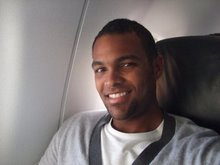
Like Florida and California and any other sun-shiney place that boomed in the 50s and 60s, Brasília's spread way, way out. So an afternoon of running errands without your own private vehicle just might look like this:
12:00pm - You finish work early with the anticipation of making a deposit at the bank, stopping by the
TAM office downtown to pay for a plane ticket that can't get paid through the website because of a glitch, and pick up tickets for Saturday's tango and milonga event at the
Centro Cultural Banco do Brasil (because if you wait until Friday, they'll be sold out...trust).
12:15pm - A kindly coworker whose waiting for her own lift to the airport offers you a ride to the bank, which is on the way. That's 3 reais (pronounced hay-ICE...as of May 25, 2010, USD 1 = BRL 1.85) and at least 30 minutes of walking/waiting/bus time saved.
12:30pm - The friend arrives to pick you and your coworker up. They chat about flying up to Belem, at the mouth of the Amazon, to work on a government project and return two days later.
12:50pm - You arrive at the bank, take a number, almost make it to the counter when some relatively-healthy-looking 50-year-old shows up and gets to skip you because he's "elderly," but aside from that, you make the deposit with relative ease.
1:15pm - You run out to the bus stop to make sure you catch the bus actually headed to where you're going. The first bus that passes is not one that's going where you're going.
1:35pm - Neither is the second.
1:50pm - Neither is the third.
1:53pm - A small car with three women and a male driver pulls up and yells, "Rodoviaria" (which means bus station, which is where you're going). You say, "sim" and one of the ladies squeezes in the back while you squeeze into the front seat with the broken seatbelt and hope to high heavens that homeboy doesn't wreck the car. Oh, and your knees are pressed into the dashboard, so really, you wouldn't go anywhere if there were to be an accident, you'd just have shattered kneecaps.
2:10pm - You arrive at the Rodoviaria, thank your driver and tup him the R$3 you would have paid the bus driver, then navigate the few blocks through the concrete ant farm that is downtown Brasília, dodging cars, soaking up sun, and feeling heady about the fact that you're navigating the few blocks through the concrete ant farm that is downtown Brasília.
2:22pm - You get to the TAM office, located at the once-grand Hotel Nacional, and take a number: 162. They're now serving number 148.
3:40pm - You leave TAM, ticket in hand, but got-damn if it wasn't like pulling teeth to get them to waive the R$30 "administrative fee" for processing a ticket that you should have been able to do yourself, if it hadna been for that glitch. Cute office manager, though.
3:42pm - The free "hourly" shuttle bus to CCBB, which is located way off in BFE, despite its rich and profound cultural programming doesn't come until 4:50pm. You say, "screw that," and walk back to the Rodoviaria. There's gotta be a bus heading that way.
3:58pm - You ask a couple of random, blue-shirted bus drivers which greenhound is headed for the CCBB until you score; the driver of your chariot agrees to drop you off as close to your final destination as possible.
4:16pm - The driver drops you off as close to your final destination as possible: on the side of a six-laned highway with traffic zooming by at, I don't know, 100 kilometers per hour and the CCBB squarely on the opposite side of that highway
and a barbed wire fence. Lucky for you, the sun's starting to hide behind some clouds, so that should cool things down a bit.
4:19pm - You dash across three lanes, then straddle the middle divide.
4:21pm - You dash across the other three lanes.
4:36pm - You arrive at the ticket booth of the CCBB because it's located on the exact opposite side of the complex from where you crossed the highway and have to circle the entire thing on foot. Brasília really does hate pedestrians.
4:40pm - Tickets purchased! Next free shuttle bus departure back to downtown is at 5:50pm. The free wifi is out. You've got paperwork for your job to do while you wait, and eat an overpriced pancake wrapped around some chicken and cheese at the gallery cafe.
5:25pm - The shuttle bus arrives, but the driver says it isn't leaving for another 25 minutes. Real quick, snap some pictures of the twilight sky being covered over with rain clouds and some of those cool cosmic-clover streetlights they have all over Brazil.
5:50pm - It's actually pouring rain, uncharacteristically, since it's supposed to be the dry season. The bus departs. You can't see shit out the windows.
6:28pm - After fighting through a sea of flashing tail lights, the shuttle arrives at the drop-off point closest to your house: a taxi stand near the subway station at which there are no taxis standing. It's still raining, but not pouring. Some people are like, "screw that," and walk out into it. You do, too.
6:35pm - You're walking faster than the pack of cars inching along the road next to you and you're glad you didn't waste money just sitting in a cab. Your shirt's getting soaked, though.
6:49pm - You arrive home, your three goals accomplished.
Total elapsed time:
6 hours, 49 minutes.
Fly Brother welcomes your views. If this post hit the spot, please comment and/or click .
.

 I bought a car. Finally, after taking three hours to get to the doctor's office, or seven hours to do three things by bus in Brasília (which really means Orlando in Portuguese), I have my 2011 Fiat Palio Fire Economy. Fiat (pronounced FEE-atchee here) is an Italian car company that doesn't exactly make Ferraris, but keeps me from having to hoof it around the Brazilian capital. I financed the $18,000 thing for sixty months, which means my monthly payment is about 10% of my pre-tax salary, but I think I got a good deal, all things considered; cars are a luxury Brazil. Anyway, I would write more, but I gotta put some kilometers on my new baby. She's preto vulcão, which means volcanic black* (or, Black Like Me, as I like to say), but I need a name for her. Suggestions?
 *Y'all know I'm taking it over to somebody's cousin's house in the hood to get a spoiler and that darkboy tint on the windows, right?


 Posts
Posts