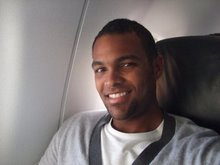
I haven't been on vacation in Florida with my entire family since the mid-90s, and spending this Christmas with them in Orlando brings back and brings up all sorts of memories and madness. Back in March, while still living in Colombia, a bout of homesickness caused me to pen an homage to my home state, a celebration of both the geographic and temporal location that serves as my cultural foundation. Being back home, I find these same sentiments echoed in family conversations and collective memory, in spite of mindless sprawl and cultural homoginization, increased population and pervasive plasticity of modern Florida. For new readers, I hope you find this post enlightening and entertaining. For long-time readers, I hope this re-post is just as engrossing as you originally found it (well, assuming you found it engrossing, originally :-)Happy Holidays to all the Fly Folk out there. Thank you for reading.~~~~~~~~~~~~~~~~~~~~~~~~~~~~~~~~~~~~~~~~~~~~~~Missing Middle Florida(Originally posted March 10, 2009)
There's the moonlight and magnolias of the North, the kid-centered wonders of Central, and the tropical swing of the South - the geographic regions of the state of Florida. Then there are the temporal zones: the Old Florida of Osceola and Andrew Jackson, of Saint Augustine and the Confederacy, of Zora Neale Hurston and Marjorie Kinnan Rawlings. The New Florida of Walt Disney and Jeb Bush, of Little Haiti and Little Havana, of Spring Break and Dave Barry. And I grew up somewhere in between, a native Floridian born to native Floridians, who have a connection to the peninsula, know all the secret places, and how to get everywhere in the state without once climbing on one of those new-fangled interstates. I'm from Middle Florida.
Being born at the tail end of the 70s means my memory only extends as far back as 1980, a time of transition for my home state. Since the late 19th century, hell, since the 15th century when Juan Ponce de Leon named the place for the flowers he saw while killing off Tekestas and searching for the Fountain of Youth, Florida has been a tourist haven. But I came of age just as manufacturing and the military - long mainstays of the state's economy, lead by Jacksonville ("The Bold New City of the South") - took a backseat to newly invented mass tourism and an upgraded agricultural sector, just as the Mariel Boat Lift cemented Miami's status as capital of Latin America, after the influx of snow birds and Baby Boomers but before the boom of babies born to folks from other states and other countries. I'm not pre-Disney, but I'm pre-Disneyfication.
I remember taking U.S. 17 to Orlando, U.S. 90 to Tallahassee, and A1A to Daytona Beach, passing the original themed attractions built along winding hightways at the advent of the Motor Age that had already faded in the shadow of their newer, flashier, 2.0 Beta versions in Orlando, before re-inventing themselves in order to compete: the thin, weary dolphins at
Marineland; corny water ski shows at
Cypress Gardens; determined young synchronized swimmers in mermaid outfits at
Weeki Wachee.
I miss those days: school field trips to the fort at the "Nation's Oldest City,"
Saint Augustine, marveling at the kooky billboards for the
Ripley's Believe-It-or-Not Museum and stopping to pick dates off the palms that lined U.S. 1 out of town.
Gatorland, Gatorade, the
Gator Bowl, and a fierce, sometimes irrational devotion to the
University of Florida Gators. Crosstown high school football rivalries between Raines and Ribault and cross-state rivalries between Lake City Columbia and Fort Walton Beach Choctawhatchee back when high school football rivalries mattered. Indigenous place names like Okeechobee, Okefenokee, Ocoee, Loxahatchee, Pahokee, Immokalee, Kissimmee,
Ichetucknee, Chattahoochee, Apalachee Parkway, Miccosukee Road (shouts to Tallahassee). The ease of slipping between Southern and tropical cultures as effortlessly as organizing a random crab boil or barbecue on a typical hot-ass April or September afternoon.
FAMU's Homecoming Parade, which always started out on a freezing November morning and ended up blazing hot by 10 AM, and the FAMU-
BCC Florida Classic, back when it was held in Tampa, back when the Tampa Bay Bucs sucked.
Kennedy Space Center and Melbourne
Jai-Alai. Dances like the Tootsie Roll and the Tawlet Bowl, accompanied by syncopated Flawda Bass and the raunchy lyrics of Dade County's poet laureate,
Luther "Luke" Campbell. The Fort Lauderdale
Swap Shop and Flea USA and the
Opa Locka-Hialeah Flea Market (straddling Lock-town y la República de Hialeah). Miami with only a small cluster of skyscrapers Downtown and televised vice on run-down South Beach and the original
Orange Bowl and an equal number of everybody from everywhere back when, it seemed, more folks got along better (though the
1982 Overtown riot told a different story). Tropical storms with names. Blue skies in the east and black skies in the west. Miles of undeveloped coastline. Flatness.
No, I don't miss the stench of the pulp mills and the knowing where you could and couldn't go as black folk after dark, lest we forget the Florida was indeed a slave state and didn't desegregate schools until almost 1970. After all, many strange fruit-bearing trees grow alongside palm trees. But I do miss the strong black communities and institutions that were established and thrived in that environment of hate. And I miss being in a place where I have roots as exposed, yet as deep as the mangroves in the Everglades.
And I miss
Publix and
Winn-Dixie.
And skee-ball and go-karts at Fun 'n Wheels.
And
Wild Waters.
And
Jenkins' Quality Bar-B-Q.
I think I'm just getting old.
Fly Brother welcomes your views. If this post hit the spot, please comment and/or click .
.

 There's the moonlight and magnolias of the North, the kid-centered wonders of Central, and the tropical swing of the South - the geographic regions of the state of Florida. Then there are the temporal zones: the Old Florida of Osceola and Andrew Jackson, of Saint Augustine and the Confederacy, of Zora Neale Hurston and Marjorie Kinnan Rawlings. The New Florida of Walt Disney and Jeb Bush, of Little Haiti and Little Havana, of Spring Break and Dave Barry. And I grew up somewhere in between, a native Floridian born to native Floridians, who have a connection to the peninsula, know all the secret places, and how to get everywhere in the state without once climbing on one of those new-fangled interstates. I'm from Middle Florida.

 Posts
Posts
 Conquer Earth, Guillebeau-Style