If you hate math, traveling overseas might be somewhat of a headache. You knew the balmy reputation of Jamaica before you booked the ticket, yet you packed a couple of sweaters, just in case, when you read the average temperature was 25 degrees. And you had to do a double-take when you noticed the flight departed at 18 o’clock. What the hell is 18 o’clock, anyway?
The United States is pretty much the oddball when it comes to numerical representations—still using weights and measures descended from the British imperial system (pounds, miles, feet and inches), Fahrenheit for temperature, and a twelve-hour am-pm clock instead of the metric system, centigrade temps, and “military time” used all over the rest of the world.
So to keep you on top of the numbers game when traveling abroad, I’ve provided a couple of handy equations that will give you equivalents for the most commonly required measurements. Yes, this involves addition, subtraction, and sometimes, multiplication and division. You might find a calculator to be especially nifty if you haven’t studied any of these operations since the sixth grade.
· Time: The 12 versus 24-hour clock
This one is easy. Most digital clocks outside of the United States (have you ever seen a traditional clock go past 12?) run on a continuous 24-hour time scheme, as does the US military. This means there’s no 6pm. There’s 18:00. The time between 1:00 and 11:59 is automatically considered morning, just as 12:00 until 12:59 is automatically considered afternoon. Once the clock strikes 13:00, the math part comes in. From every hour until 23:59, you’ll have to subtract 12 from the hour slot (18:00 – 12 = 6:00pm). The midnight hour goes from 0:00 to 0:59. Neat, right?
· Temp: Fahrenheit versus Centigrade
A Uruguayan math teacher taught me this trick. If you’re already overseas and the temperature is something like 32 degrees Centigrade, you simply multiply by two, then add 32 for an approximate temperature in Fahrenheit. So, 32 × 2 = 64 + 32 = 96. Don’t be fooled—water don’t freeze at 32°C. For the reverse, maybe 32 degrees Fahrenheit, you have to subtract 32, then divide by two. So, 32 – 32 = 0 ÷ 0 = 0°C. Brrrrr. (For the exact temperature, use 1.8 instead of 2 to multiply or divide).
· Distance: Miles versus Kilometers
Get your calculators out for this one. One mile equals 1.61 kilometers. That means, if the distance between the airport and the nearest Hilton is 100 miles, it is 161 kilometers away. 100 × 1.61 = 161 (I know, I did an easy one). For the reverse, if a distance is 145 kilometers, then you multiply by 0.62 to get the mileage. 145km × 0.62 = 89.9 miles.
· Altitude: Feet versus Meters
This one’s also for the big brains. One foot equals 0.3 meters. Damn. So someone six feet tall is only 1.8 meters (or 180 centimeters). 1 × 0.3 = 1.8. A meter, however, is 3.28 feet. That means if the altitude of a place is 3,000 meters, you’re actually 9,840 feet into the air. 3,000m × 3.28 = 9,840’.
· Weight: Pounds versus Kilos
For the muscleheads, most gyms overseas have weights in both pounds and kilos, and many of your fellow gym rats can give you approximate conversions. But in Brazil, for instance, the gyms feel like they’re far enough away from the United States that they don’t have to use pounds, and you may end up learning the hard way that 20 kilograms absolutely does not equal 20 pounds. The rough conversion is that one pound is almost half a kilo (actually 0.45), while one kilo is a little more than two pounds (2.21 to be exact). Anyone on a structured workout plan, which can be difficult to maintain while on the road, might need exact conversions, as rough approximations can grow rougher rather quickly. A 20-kilo dumbbell equals 44.2 pounds (20kg × 2.21 = 44.2lb), while a 20-pound dumbbell weighs 9 kilos (20lb × 0.45 = 9kg). Gastronomists can also use this equation for buying rice, grains, vegetables and such at super- and flea markets.
Happy measuring.
Showing posts with label documentation. Show all posts
Showing posts with label documentation. Show all posts
Saturday, November 15, 2008


Tuesday, October 14, 2008
Get in a Travelin' Mood
 A true Fly Brother or Sister is restless. He or she cannot stay put in one place for very long, lest neurosis set in. But many aspirants are not yet in the habit of stepping out the front door for anything other than work, personal errands, or picking up the Sunday paper.
With Netflix, broadband, and on-demand cable, there's no reason to leave home. For many people, being home is comfortable, as it should be. But for many of those same people, the idea of travel, of experiencing something different, is an actual desire that they may not yet know how to turn into a reality. And it's much easier (and cheaper) to catch an episode of Wild On: Panama than to actually get crunk in Panama (Panamá, that is, not Florida).
Well, I'm here to change all that. You've already ordered your passport, but while you're waiting the six weeks for it to arrive, you can get your minds right and get out of the house!
Honestly, it's as simple as gassing up the car, breaking out the Rand McNally, and hitting the road.
(This may be a little difficult for car-less folk, but we'll make the assumption that most of that group lives in the Northeast and has rail and bus access to other cities.)
Day trips are a great way to ease yourself into more extensive travel. There's much of America to be explored within a couple-hours' drive of wherever you are. And if the mood strikes and the finances are right, weekend road-trips can always be arranged. Though the more the merrier, even solo soldiers can discover their surroundings and catch the adventure bug.
For day trips, fuel is usually the primary cost factor ("costly" being an understatement these days). But to compensate, stop by a grocery store and stock up on fruit and snacks, or maybe pack a cooler with some lunchmeat and a loaf of bread. It sounds collegiate, but college is where you should have learned how to live lean but still live. You can be grand and get the deli-sliced imported turkey from France to go with your Grey Poupon, but it's still more fun and less time consuming than wasting hours waiting for food in a restaurant when you should be enjoying the journey (unless, of course, that particular restaurant is a focus of the trip...some folks drive hours just for some Jenkins' Barbecue in Jacksonville, Florida).
Don't know where to go? Most large cities in coastal states, even if they aren't located on beaches themselves, are within a two hour drive of a beach or waterfront area. National and state parks are always excellent bets for nature lovers (the National Park Foundation offers a great $80 twelve-month pass to all US national parks that require an entrance fee...more incentive to get outdoors). Alternative newspapers like the Village Voice, Washington City Paper, or Creative Loafing are loaded with info about places to go in and more importantly out of the immediate vicinity (usually just the print versions, though). Also, most cities and regions of the country have ready-made Internet guides with insight on where to go, where to eat, where to shop, and where to stay. Use an Internet seach engine to find local city guides and tourism websites, as well as other independent sources. Among some of the day tripping websites that caught our eye:
USAToday offers a great article on "seven fabulous escapes" from New York City.
AllAcrossTexas.com has a section that features day trips from all the major Texas cities like Dallas, Houston, and San Antonio.
Day trips around the nation's capital, Washington DC, are even outlined on the US Senate website in a comprehensive, if not graphically appealing way.
ATLiens are blessed with both urban and rural excursions nearby, as covered by the Journal-Constitution's day trip page, while Viator serves up info (and prices) for South Floridians needing a break from the 305.
Chicagoans can hit up Metra's "day trips by train" page and not have to shovel their car out until Monday morning.
And when it's not raining in Southern California (they tell me never), check out Travels.com's LA page.
In fact, Viator and Travels.com have the most comprehensive listing of interesting excursions that I've found, covering almost the entire US.
Lastly, if you still need advice on where to go for a day or quick weekend escape, ask around. Surely your friends, neighbors, co-workers, or even strangers might have an idea of something, anything to do that doesn't involve a remote control.
Friday, September 5, 2008
Getting Your Walking Papers
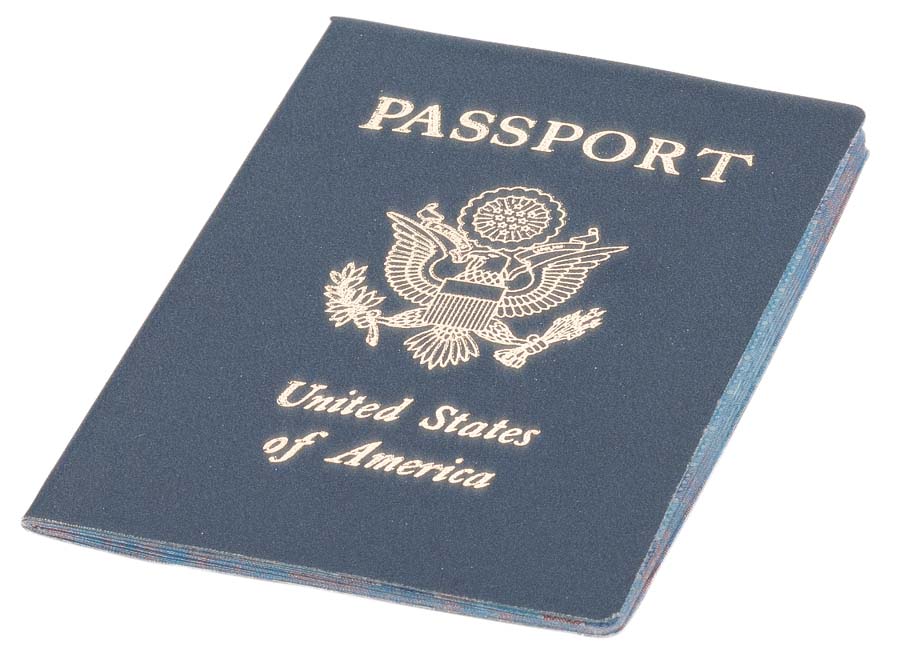 By age thirty, most everyone should have a passport. If you are over thirty and don't have one, I won't waste any time criticizing (triflin...). I'll just say that there's no better time than now to start the process, and I've tried to make the process a little easier by sifting through the US State Department's travel site - travel.state.gov - for information on obtaining a US passport. I'll also say that the folks thinking they can pop down to Mexico or the Bahamas with their driver's licenses these days are in for a rude awakening at the border.
The State Department operates several passport agencies, located in Boston, Chicago, Denver, Honolulu, Houston, Los Angeles, Miami, New Orleans, New York, Norwalk (CT), Philadelphia, San Francisco, Seattle, and Washington (click the city name for info on that particular agency). Lastly, passport applications can be picked up and submitted at almost all US Post Offices.
You can also download and print a first-time passport application: here.
The total cost (in United States Dollars) for a first-time passport is $100 for anyone aged 16 and over and $85 for anyone under 16. The charge is broken down into the passport fee ($75 for 16 and over/$60 for under 16) and the execution fee ($25 for both). If you apply for your passport directly through the State Department at a passport agency, the total cost may be made in one payment and in several methods. If applying through the post office, the application fee must be made payable to the US Department of State, while the execution fee must be made payable to the US Postal Service (check or money order only).
Additional requirements include a copy of your birth certificate as proof of United States citizenship and a state- or federal government-issued photo ID for proof of identity, along with two 2x2-inch passport photos that can be taken at any FedEx-Kinko's or certain stores and pharmacies like Walgreens, CVS, or Wal-Mart. A list of other acceptable documents and forms of ID can be found here.
Passports can take up to 6 weeks to arrive, but can be expedited by visiting a passport agency, or requesting rush service with the application at the post office, for an additional $60. More information on an expedited passport can be found here.
You can also check on the status of your passport application here.
Passports for adults are usually valid for 10 years. Passports for children are valid for less time and require a different application procedure (check here).
Most foreign governments require that a US passport be valid for at least another six months after the conclusion of the trip. An adult renewal passport costs $75, and more information can be found here.
For international ballers who are running out of room in their still-valid passports, extra pages can be ordered, or you can get a newer, thicker passport here.
September 11 has, of course, caused a tightening in travel documentation requirements, hence the establishment of the WHTI - Western Hemisphere Travel Initiative. Essentially, all the formerly passport-free areas for road trips and cruises - Canada, Mexico, and much of the Caribbean - will by 2009 require either a passport; a newfangled device called a passport card, good for border crossings by land or sea; or other "WHTI-compliant document." The cards cost $45 for a first-time adult applicant, $35 for a first-time child applicant, and $20 for current valid passport holders. All air travel to these regions will continue to require a traditional passport book.
Any other information you might want, need, or forgot to ask...check the website, because, hell, the State Department ain't payin' a brother.
Subscribe to:
Posts (Atom)


 Posts
Posts