Part 3 of a 3-part series on lesser-known, but no-less-hot, Carnival celebrations.
On the tiny Caribbean island of Trinidad, four-hundred years of recorded history under various European flags and immigration from the four corners of the globe have shaped and molded the look and feel of Trinidad and Tobago Carnival into one of the most distinctive and flavorful events in the English-speaking world. Like Mardi Gras in New Orleans, TnT Carnival stems from French colonization (though Spain held title over the place back then) and has incorporated elements from Africa, Europe, Venezuela, India, and North America; these elements, in turn, were exported throughout the West Indies and overseas, including London's famous Notting Hill Carnival.
Besides the obvious visual stimulation of a scrumdiddlyumptious backside winin' to some soca, TnT Carnival is an ocular feast of traditional costumed characters that make the Disney Main Street Parade look like an elementary school Christmas pageant. Observe:
The Fancy Indian (based on traditional Plains Indian dress from the modern-day US and Canada): Photo by caribbeanfreephoto
The Moko Jumbie (derived from the Congolese tradition of village protectors who could see trouble before it arrived...basically, security guards): Photo by Withthejameses
The Midnight Robber (inspired by the traditional African storyteller, the griot, who tells tall tales about his exploits, adventures, and prowess...lookin like a piyimp):
Dame Lorraine (a playful version of a typical French aristocratic lady, with her big-booty self): Photo by longdistancelady
Jabs (French patois for "diable" - devil - these firestarters come in various shades and manifestations - wings and sharp teeth and such; as you can see, they start young, the little hellions): Photo by dexout
Cow Folk (based on, well, cows): Photo by shawnking99
*The word "mas" is short for "masquerade" and is used to denote the various costumed bands of revelers during TnT Carnival.
Part 2 of a 3-part series on lesser-known, but no-less-hot, Carnival celebrations.
Growing every year by word of mouth, the Carnaval de Barranquilla on the Caribbean coast of Colombia is more an expression of folklore and regional culture than random debauchery and merriment. In 2003, the festival was named a Masterpiece of Oral and Intangible Patrimony of Humanity by UNESCO, the cultural body of the United Nations. Instead of an ever-shifting theme, this party features an array of signature dances that embody the synthesis of cultures that make up Colombian society, each with a particular set of costumes and its own rhythmic beat. Here are three of the most popular dances performed at Carnaval:
The national dance of Colombia, the cumbia marries the gyrating hands of the Spanish, the swiveling hips of the Africans, and the steadfast foot-shuffle of the Indigenous peoples in a pas de deux of civilized seduction.
The costume of the garabato supposedly symbolizes life and death, while the movements indicate nothing but a joy for living (and drinking).
More traditionally danced at night and in loincloths, the mapalé ("fish out of water") has probably remained the most unchanged from its cultural origins of all the Carnival dances.
Part 1 of a 3-part series on lesser-known, but no-less-hot, Carnival celebrations.
While most of the world looks to its more famous neighbor to the south as the epitome of pre-Lenten debauchery, Brazil’s first capital, Salvador da Bahia, is truly where you find Brazilian Carnival. Or, rather, Carnival for Brazilians. You don’t “see” Carnival in Salvador from the sidelines, you live it for six days and nights, non-stop, eating skewered street meat and getting no sleep. Billed as less commercial than Rio’s renowned festivities, Brazilians from north to south pounce on Salvador to dance in the shadow of their favorite pop stars, and maybe even have a quick fling or two with a hottie from another state. Still, Carnival in Salvador offers ample opportunities for both the innocent and the grown-and-sexy to enjoy the combination of history, culture, and unexplainable magic for which Brazil is known.
The colonial capital from 1549 to 1763 and once the largest slave port in Brazil, Salvador holds nearly three million people, over eighty-percent of whom having discernable African ancestry. And the music and dance and food originating here—more than in any other part of Brazil—is mainstream, not just a subculture. There is no place quite like Salvador. Some places come close: pre-Katrina New Orleans with music on every corner, Havana, where salsa and Santería share equal billing.
But no place captures the convergence of African and European cultures as thoroughly and inextricably as Salvador. The city government has even erected statues in homage to the “Orixá,” the Yoruba pantheon of deities celebrated in Brazilian Candomblé, Spanish Caribbean Santería, and Haitian Vodou, the syncretic religions created when slaves were “converted” to Catholicism. This cross-pollination forms the bedrock of Brazilian culture and is manifested at its purest in Salvador, where anyone can add his or her own flavor to the already rich stew. Carnival is a two-pronged event in Salvador. Family-friendly Pelourinho (“whipping-post” in Portuguese), the city’s church-steepled historic district perched high above the sea, plays host to traditional costumed bands of revelers and samba groups that parade over the cobblestones with interminable energy. Unlike Rio, with its ever-changing samba competition squeezed into a specially-designed stadium, Salvador’s groups remain true to historical themes—grandmothers swirling dervishly as hoop-skirted “Baianas,” white-robed men walking pensively as “Filhos de Gandhy” (Sons of Gandhi)—while be-feathered kids and muscle-toned capoeristas frolic in sunburnt plazas. Clowns and mimes cavort on strategically-placed stages, all-Asian percussion sections tap out lightning-fast sambas, up-and-coming ingénues coo bossa nova classics from back alley cafés, and body-painted teenagers grab unsuspecting tourists for a little shimmy-shaking. Starting mid-afternoon, Carnival gets down-and-dirty, literally, in the Cidade Baixa (Lower City), with the “trio eletrico” parades in the downtown district of Campo Grande, or along the beach at Barra and Ondina. Essentially gigantic boomboxes hitched to trucks, trios eletricos are moving concerts, topped by wildly popular Brazilian musical acts that belt out gyration-inducing “axé” music, a bawdy combination of samba and reggae. Timbalada, Olodum, Daniela Mercury, and Ivete Sangalo entertain hundreds of thousands of fans—often drunk, horny, or both—who squeeze into the streets around the trios and are known collectively as “pipoca” (popcorn) because usually the only range of motion in the crowd is vertical. Young people wear the most basic attire, bring nothing more expensive than a disposable camera, and stash their money safely in their undies; older partiers watch the action from bleachers along the sides, a decidedly less-raucous experience but one with a better-stocked bar than on the street.
Yes, I have been smack in the middle of all this humanity. Yes, it's the lick!
Still, the intimate contact of thousands of bodies under an infectious rhythm conjures up a natural high that keeps the place rocking until daybreak. Should an unexpected rainstorm arise, clothes come off and the party don’t stop. You, like the Brazilians around you, just let the wet cleanse you of the sweat.
For the next week, in most of the Catholic-influenced world, millions are enjoying the last few days of fleshly delights before the forty-day pre-Easter fasting and sacrifices of Lent. These celebrations, aptly named Carnival (or "farewell to the flesh," either because of the religious ban on meat during Lent, or because it's the time to indulge in uncharacteristic behavior), have melded cultures and traditions the world over into Earth's biggest, raunchiest, off-the-hookest simultaneous party. Everyone knows about the thonged-and-feathered lovelies of Rio, the chiaroscuro masques of Venice, and the beads and breasts of Mardi Gras in New Orleans. Starting tomorrow, I'm going to introduce you to three other events - just as bold, loud, and unchaste as their better-known cousins. And then, I'll help you plan your trip for next year.
In the face of life's always unexpected challenges, I've been needing a little inspiration to stay motivated on many fronts. After searching through some old travel notes, I found a great quote by a great man about a great feat of human ingenuity:
It is not the critic who counts, nor the man who points out how the strong man stumbled, or where the doer of deeds could have done them better. The credit belongs to the man who is actually in the arena; whose face is marred by dust and sweat and blood; who strives valiantly, who errs and comes short again and again; who knows the great enthusiasms, the great devotions, and spends himself in a worthy cause; who, at the best, knows in the end the triumph of high achievement, and who at the worst, if he fails, at least fails while daring greatly, so that his place shall never be with those cold and timid souls who know neither victory or defeat.
-Theodore Roosevelt, from a plaque in the rotunda of the Panama Canal Administration Building.
Last week, Delta Air Linesannounced non-stop service from New York-JFK to Port-au-Prince, Haiti, beginning June 20. Introductory fares start at $129 each way, plus taxes and fees. This addition gives American Airlines some competition on the route, as Delta becomes only the third US carrier to fly to the beleaguered, but culturally-entrancing Caribbean nation.
When I was studying in the Dominican Republic in 2001, I had every desire to "pop over" to Haiti, but the journey meant a half-day's bus ride from Santo Domingo to the border, then another day just to a decent-sized town. Alas, my schedule never permitted it, but now you guys can go and take pictures and tell me all about it.
I've been in Colombia for almost four years now, since the summer of 2005, when I took a job as an eager and idealistic (yeah, right) English teacher at the Universidad del Norte. I was initially drawn to the country as I was nearing the end of my masters program in DC; I wanted to move to a Latin American country for a few years to improve my Spanish, before moving to Spain and obtaining a doctoral degree there. The main pre-requisites were (1) that the country have a strong African cultural element to its society (particularly the music and dance) and (2) that I could find a decent-paying university teaching job. Pre-req #1 limited the choices to Colombia, Venezuela, Panama, and the Dominican Republic. Pre-req #2 narrowed the field down to...well...Colombia. I visited the country over Spring Break, at the behest of another black American living and working in Medellín, who'd fallen in love with the place. After a few days, I was all set to set myself up in Colombia's second city when my prospective boss at the language institute informed me of the salary: barely US $700 a month at the time ("No thanks, player," I demurred...I might want to be able to see my mama at least once a year). But I heard about Uninorte and hopped a cheap flight up to Barranquilla, where I landed a job in Shakira's hometown, thinking I had found a mini-Santo Domingo (seabreezes blowing in from the Caribbean, attractive people ranging from coal to cream, the booty-moving tinkle of salsa and merengue). Wrong.
Long story short, we've had a rocky relationship in these last four years, me and Colombia.* I'm one of a handful of professional blacks in a country with around 40% of its population being of African descent (compared to 13% in the US); most of the people who look like me are maids, security guards, or driving Miss Margarita (that's Daisy in Spanish); and I'm pretty much a political leftist (belief in quality gubment-sponsored education and health care and all that jazz), in a relatively staunch right-wing society. There's serious denial about the racism here, or colorism if you will, because people like to say that everyone's mixed and they don't even see race, though they're quick to call the mango seller outside the school, "Negro." Some days, I'm like a one-man Civil Rights Movement.
Still, I'm aware that these are issues that occur in all post-colonial societies in one form or another, even in my beloved Brazil. And even though my time in Colombia hasn't been the endless vacation that I wasn't even naive enough to believe it would be, there are some wonderful aspects of the country that are unknown to most people outside of it. Because of incredible topography, Colombia's climate goes from tropical to Alpine in the span of a one-hour flight. Every city has a distinct flavor, from the quiet bustle of chilly Bogotá to the sizzle of Cali's salsa-splashed streets, and every geographic region has a corresponding cultural variation reflected in the people. "Colombia Mía" (My Colombia) is the title of a recurring series of images and text here on Fly Brother that will offer you guys a glimpse of the beauty, complexity, and poignance of what has been, for better or worse, my temporary home. Who knows...maybe as I post, we might rekindle our romance.
*One might ask, "Well, why are you still there, Fly Brother?" And Fly Brother might answer, "$$$."
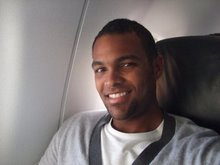
Fly Brother tackles international travel in unabridged, unapologetic, full and complete color. It's also the blog name of writer and educator Ernest White II, a tall, ruggedly handsome, erudite, occasionally delusional Black American male living in Brazil's largest city.


 Posts
Posts